Artificial intelligence, or AI, is appearing in more and more areas of healthcare, and dentistry is no exception. You may have read about software that can spot problems on dental X-rays. It is a genuinely interesting development, but it is also easy to misunderstand. Here is a clear look at what AI can currently do in the dental chair, and what it cannot.
A second pair of eyes on your X-rays
Dental X-rays, also called radiographs, show what cannot be seen by looking in the mouth: decay between the teeth, the bone that supports them, the roots, and signs of infection around their tips. Reading them well takes training and care, and early changes can be subtle.
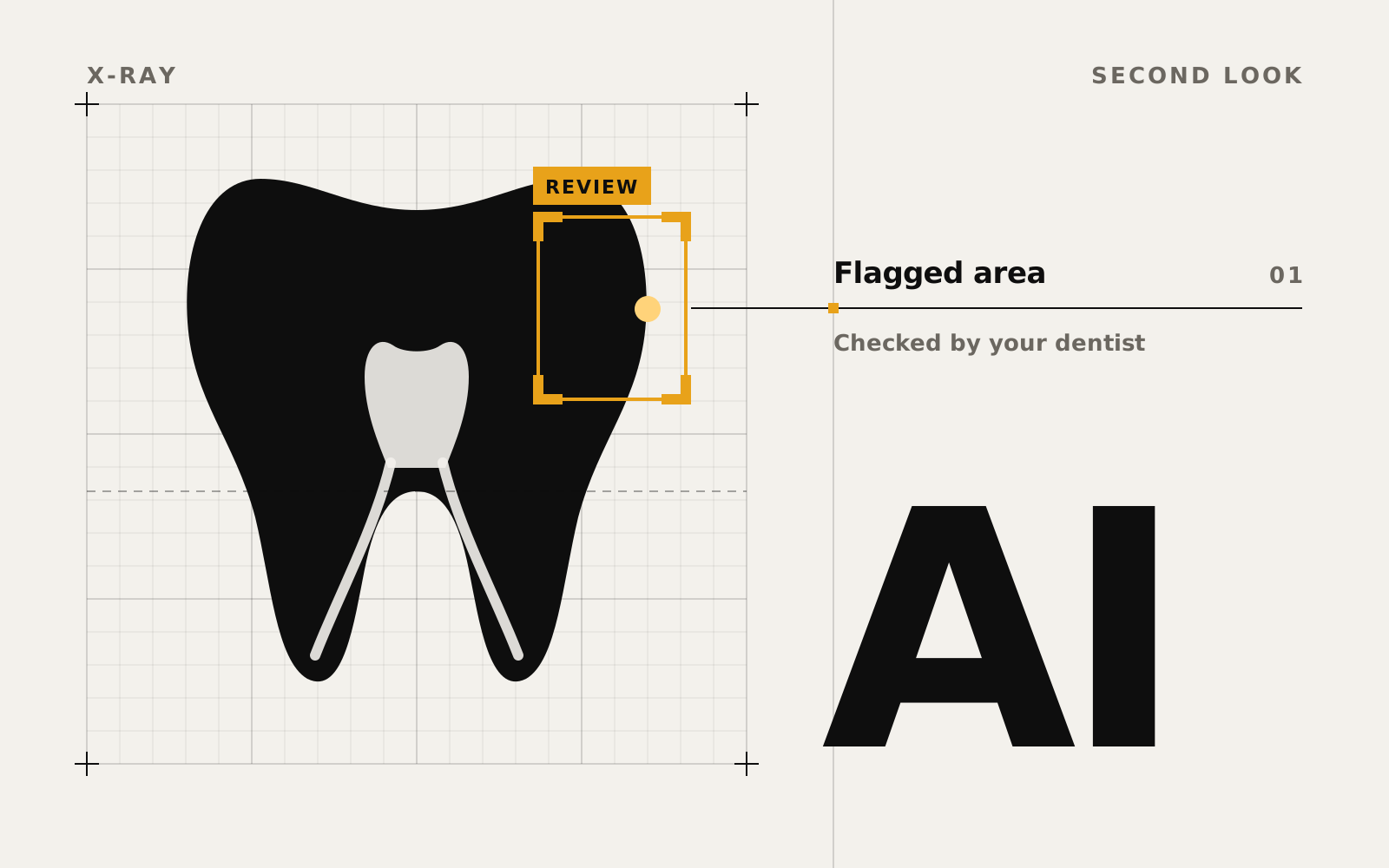
Dental AI tools are computer programs trained on very large collections of labelled X-ray images. When a new image is loaded, the software highlights areas that may need a closer look, often by drawing a box or outline and labelling what it suspects. The dentist then reviews those areas alongside their own assessment.
The best way to think of it is as a second pair of eyes: a tool that prompts a closer look, not one that works on its own.
What AI can help look for
Depending on the software, AI tools may be used to help identify:
- Early decay, especially between the back teeth, where it is hard to see directly.
- Bone loss around the teeth, which can be a sign of gum disease.
- Changes at the root tips that may point to infection.
- Existing dental work such as fillings, crowns, implants and root canal treatments, which helps keep records organised.
- Changes over time, by comparing new images with earlier ones.
Finding problems early matters, because small problems are usually simpler, more comfortable and less costly to treat than large ones.
3D imaging and CBCT
Standard dental X-rays are two-dimensional. For some situations, such as planning implants, assessing impacted wisdom teeth or investigating complex root canal problems, a three-dimensional scan called cone beam computed tomography (CBCT) may be recommended. It produces a detailed 3D view of the teeth, jaws and surrounding structures.
These scans contain a great deal of information, and AI tools are increasingly being developed to help measure structures, trace the path of nerves and support treatment planning. As with any X-ray, a CBCT scan should only be taken when the benefit to you justifies it, and your dentist should explain why it is being suggested.
The dentist still decides
AI software can be wrong. It may flag something that turns out to be harmless, or miss something that is there. It also cannot see your whole situation: your symptoms, your medical history, how your gums look and feel, or what matters to you. That is why AI findings need to be checked by a dentist, who combines them with a clinical examination before making any diagnosis or recommending treatment.
Technology can point to where to look. Deciding what it means, and what to do about it, remains a conversation between you and your dentist.
What about privacy?
Dental images and records are personal health information. Some AI tools send images to external servers for analysis rather than processing them on the clinic's own computers. It is reasonable to ask how your data is stored, who can see it and whether it is shared with anyone else. Any clinic using such tools should be able to answer those questions clearly.
What it means for you
For patients, AI is best seen as one of several tools that can support a careful, thorough examination. It can also make findings easier to explain, since a highlighted image can make it simpler to see what your dentist is describing. What it does not change are the basics: regular check-ups, X-rays only when they are needed, and good daily care at home.
If you have questions about how your X-rays are taken or reviewed, ask our team; we're happy to talk it through at your visit.
The best time to catch a problem is early. Book a check-up and let us take a careful look.
This article is general information and not a substitute for a dental examination. If you have pain, swelling or a concern about your teeth, book an appointment or message us on WhatsApp.